

Relocating to the United States can feel like a big leap, but it is also an opportunity to build a life with new options, new communities, and a fresh sense of momentum. Whether you are moving for work, family, education, or a long held dream, a smooth start usually comes down to practical preparation and a clear first month plan. Many people use professional guidance along the way, and services like USAFIS can help simplify parts of the immigration process while you stay focused on planning your new start.
Prepare the essentials before you land
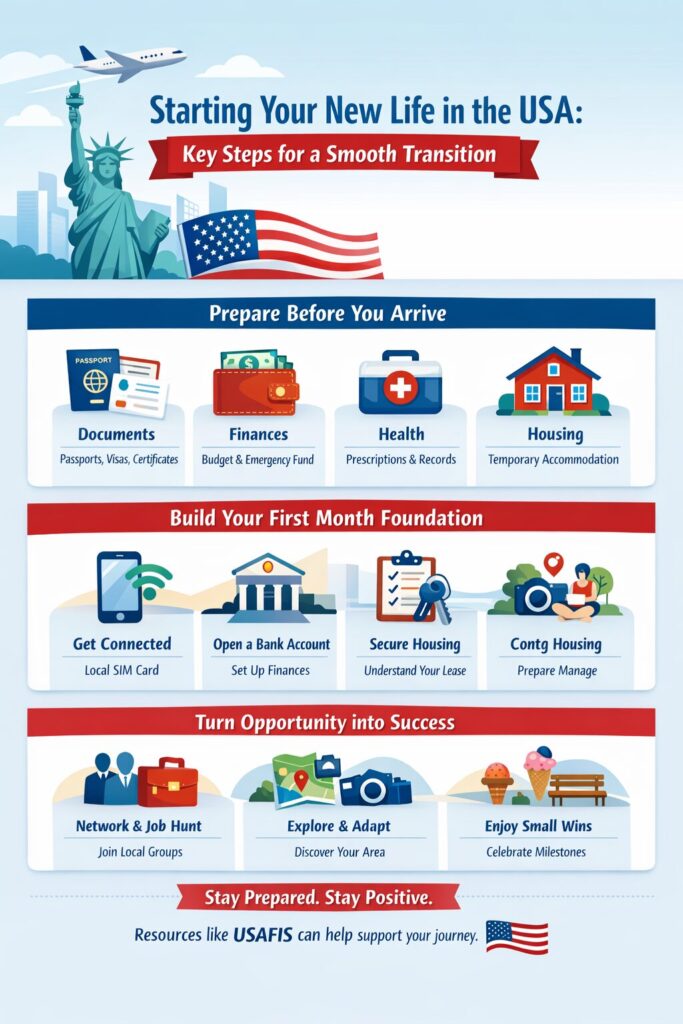
A strong start begins with your documents and your “first week basics” sorted ahead of time.
Make digital and printed copies of key paperwork, including your passport, visa documents, birth certificate, marriage certificate if relevant, diplomas, professional licenses, immunization records, and any official translations. Store one set in your carry on and one in secure cloud storage.
If you already know where you will live, prepare proof of address documents you may need for services and accounts. If you do not have a long term address yet, consider temporary housing that provides a clear mailing address option, since many processes in the U.S. still rely on mail.
Money planning matters. Notify your bank about international travel, confirm your cards will work abroad, and consider keeping a small emergency fund accessible. In your first days, you will likely spend on transportation, groceries, and basic home items. Having a simple budget for the first month reduces stress and helps you make better decisions.
Health preparation is another confidence booster. If you can, arrange a short medical checkup before departure and refill essential prescriptions. Bring your prescription details and consider how you will access healthcare in your first weeks.
Build your first month foundation
Your first month is about stability. Once that is in place, the fun part begins: exploring, meeting people, and building routines.
Start with connectivity. A local SIM or eSIM plan makes everything easier: directions, job calls, banking logins, and setting up appointments. Next, set up a bank account if you are eligible and it fits your situation. A local account can help with salary payments, rent, utilities, and building a financial footprint over time.
Housing is often the biggest adjustment, so approach it with a practical mindset. If you are renting, read lease terms carefully and ask about what is included: utilities, parking, internet, and maintenance. Take photos on move in day and keep written records of any existing wear. It is normal in many U.S. cities to pay a security deposit, so plan for that in advance.
Transportation depends on where you live. In some cities, public transit is a real lifestyle advantage. In others, a car is essential. If you need a car later, use your first month to learn the local patterns and compare options calmly instead of rushing.
Turn your move into real opportunity
The U.S. is a place where newcomers often find opportunities through networks, consistency, and small daily actions. If you are job searching, update your resume to a U.S. style format, polish your LinkedIn profile, and focus on building relationships, not only sending applications. Many opportunities come through referrals, professional groups, alumni communities, and local meetups.
If you are moving with family, invest early in community. Schools, neighborhood groups, libraries, and local events can become your fastest route to feeling at home. Libraries in particular are underrated: they offer free resources, workshops, language practice groups, job search support, and a welcoming atmosphere.
Finally, give yourself permission to enjoy the positive moments. Try new foods, explore parks, learn the rhythm of your new area, and celebrate small wins like navigating your first errands or meeting your first friendly neighbors. A successful relocation is not only paperwork and logistics. It is also about creating a life that feels good, one practical step at a time, with the confidence that resources such as USAFIS exist if you ever want extra support along the journey.