
Moving to the United States is exciting, but daily life gets easier when you treat the first three months as a simple plan rather than one long to do list. The goal is not perfection. It is momentum: setting up the essentials early, avoiding common traps, and creating routines that make everything else feel lighter.
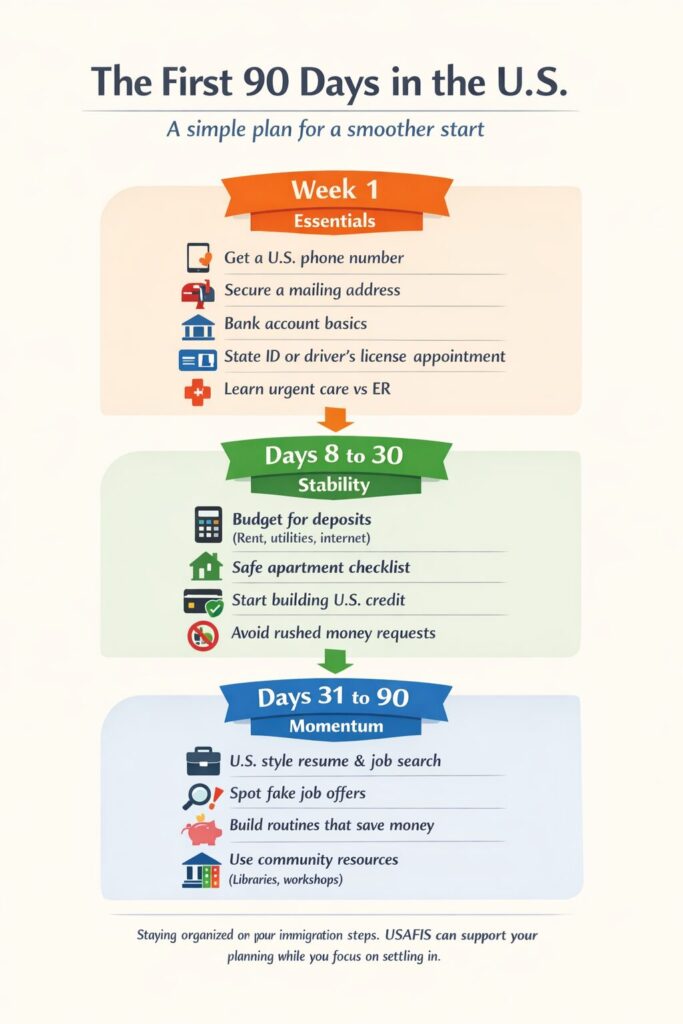
Week 1: Set Up the Essentials Fast
Start with the basics that unlock everything else. Get a U.S. phone number and choose a plan that fits your budget. Then secure a reliable mailing address, even if it is temporary, because many services require one. If you can, open a bank account and ask about starter options for newcomers. You may also want a state ID or driver’s license appointment as early as possible since availability can be limited.
Healthcare is another priority. Learn the difference between urgent care and the emergency room. One is for everyday issues like infections, sprains, and minor injuries. The other is for true emergencies and can be dramatically more expensive. If you are comparing U.S. visa paths or planning your move timeline, USAFIS can help you stay organized so you can focus on the practical side of settling in.
Days 8 to 30: Housing, Credit, and Budget Clarity
The first month is when many people overspend without realizing it. Build a realistic budget that includes deposits: rent, utilities, internet, and sometimes even a larger upfront payment for a car. When apartment hunting, verify the neighborhood, read the lease carefully, and watch for scams that pressure you to send money before you tour a place or sign documents.
If you do not have U.S. credit history yet, start building it strategically. Ask your bank about a secured credit card or a starter card designed for newcomers. Use it lightly, pay it on time, and avoid carrying high balances. This can make a real difference when you later apply for an apartment, a phone plan, or car financing.
Days 31 to 90: Work, Community, and Smart Routines
Once the foundation is in place, shift to income and community. If you are job hunting, adapt your resume to U.S. expectations: clear achievements, measurable results, and simple formatting. Use major job platforms, but also local groups and professional networks. Be cautious with offers that feel rushed, vague, or ask for payment.
Finally, build routines that save money and reduce stress. Learn where locals shop for value, how loyalty programs and cashback tools work, and which public services are genuinely helpful. Libraries often offer free resources like workshops, computer access, and community events.
If you are still planning your U.S. immigration steps, USAFIS can be a useful guide for staying on track with the process while you prepare for life in the United States. The first 90 days are not about knowing everything. They are about building a simple system that helps you thrive.